
A new chronic pain diagnosis can feel like emotional whiplash. One day life follows familiar routines, and the next it revolves around appointments, uncertainty, and a body that no longer cooperates. Emotional responses often include grief, irritability, fear, and a deep fatigue that makes simple decisions feel overwhelming.

Understanding what is happening inside your body helps restore a sense of control. A basic overview of chronic pain conditions can clarify whether symptoms relate to nerve pain, inflammatory disorders, migraines, fibromyalgia, endometriosis, arthritis, or other long-term pain patterns. When chronic pain is named and understood, coping strategies become practical instead of abstract.
Living well with chronic pain starts by focusing on what helps today. Small, informed steps create stability, reduce fear, and support real progress.
Ease Today’s Symptoms With Comfort-First Tweaks

When chronic pain is new, the first goal is steadiness. Less flare. Less fear. More confidence in handling today. These comfort-first adjustments are simple lifestyle changes you can start immediately by listening to your body’s signals.
Create a Neutral Posture Home Base
Choose one frequently used spot such as a couch, desk, or bed and adjust it for comfort. Use pillows or rolled towels to support your lower back, knees, or forearms so muscles do not work overtime. Keep essentials like water, medication, chargers, and tissues within easy reach to reduce repeated twisting and bending. This environment-first approach supports pain management beyond focusing on a single body part. This kind of “environment first” approach fits with multimodal lifestyle interventions that support pain management beyond just treating one body part.
Try the Two-Minute Heat or Ice Reset
Use short experiments instead of guessing. Apply heat for tight or achy muscles, or a cool pack for sharp, hot, or inflamed areas for 10 to 15 minutes. Rate pain before and after on a scale of 0 to 10. Stop if you feel burning, numbness, or increased pain. Comfort is the goal.
Move in Small, Scheduled Sips
Skip big workouts. Choose gentle movements that do not trigger flares, such as shoulder rolls, ankle circles, or a short walk through your home. Every 45 to 60 minutes, move for 60 to 90 seconds. Pair movement with natural cues like standing after a phone call ends.
Build a Flare-Friendly Comfort Menu
Create a short list you can follow on low-energy days. Include body comforts, calming skills, practical supports, and minimal movement options. When symptoms spike, choose one item from each category. This prevents overdoing it or freezing entirely and supports reliable symptom relief.
These tweaks are about making daily life more manageable right now. After a few days, you will know what works well enough to repeat without triggering the boom-and-bust cycle.
Habits That Make Pain Management More Automatic
Habits reduce decision fatigue when pain is loud. Small cues and repeatable routines help build confidence without relying on motivation.
Cue-and-Repeat Routine
Pair one comfort action with a fixed daily cue such as coffee brewing.
Frequency: Daily
Why it helps: Predictable cues support consistency.
Three-Line Symptom Log
Write pain level, one trigger, and one helpful action.
Frequency: Daily
Why it helps: Patterns become easier to identify and discuss with clinicians.
Soft Landing Wind-Down
Do mindfulness meditation for 3 minutes, then dim lights.
Frequency: Nightly
Why it helps: Supports emotional clarity and calmer sleep.
Gentle Range Check
Choose two easy joint movements and stop before strain.
Frequency: Daily
Why it helps: Prevents stiffness from accumulating.
Weekly Plan-and-Protect
Choose one must-do, one nice-to-do, and one rest block.
Frequency: Weekly
Why it helps: Reduces overbooking and flare cycles.
Start with one habit and tailor it to your household rhythm.
Pain Management Options Compared
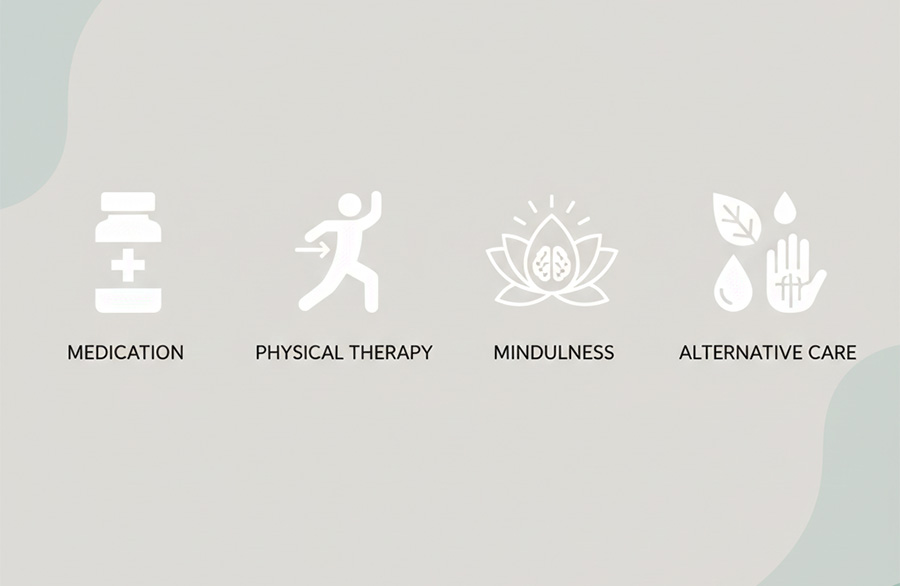
With a steady routine in place, broader support may help. Comparing pain management options allows you to choose the right tool for the right moment and bring clearer questions to your care team.
Pain Management Comparison Table Placeholder
| Option | Benefit | Best For | Consideration |
| Pharmacological therapies | Can reduce pain intensity and improve function | Short flares, sleep support, acute spikes | Side effects, interactions, dependency risk; needs monitoring |
| Physical therapy methods | Builds strength, mobility, and confidence in movement | Stiffness, deconditioning, recurring pain patterns | Requires time, pacing, and consistent practice |
| Cognitive behavioral strategies | Improves coping, reduces stress response to pain | Anxiety, catastrophizing, activity avoidance | Not instant relief; takes guided practice |
| Alternative pain management strategies | Adds comfort tools like heat, massage, acupuncture | Complementing a care plan, tension-driven pain | Results vary; cost and access can limit use |
| Interventional procedures | Targets specific pain sources with injections or blocks | Clear pain generator, severe localized symptoms | Temporary effects; risks; may need repeat visits |
(Pharmacological therapies, physical therapy methods, cognitive behavioral strategies, alternative pain management, interventional procedures)
A layered approach often works best. Focus on your primary goal today such as sleep, mobility, or calm, and choose the option that supports it.
Common Questions About Living With Chronic Pain
What daily habits help manage chronic pain?
Start with a simple daily reset. Keep consistent sleep times, gentle mobility, regular meals, and planned rest breaks. Track what helps for one week and repeat what works.
How do I cope with the emotional impact of chronic pain?
Feeling overwhelmed is normal and you are not alone since 20.9% of U.S. adults experience chronic pain. Name today’s hardest part and choose one calming action such as breathing exercises or journaling. Ask your clinician about mental health support if fear or low mood becomes persistent.
How can I stay motivated when pain limits activity?
Use minimum goals instead of all-or-nothing thinking. Two minutes of stretching counts. Stop after completion to build trust in your body. Break tasks into steps and schedule recovery time.
Where can I find trustworthy chronic pain information?
Start with your care team and request plain-language explanations. Bring a symptom log and ask for reputable patient resources from hospitals or universities. Use peer groups for encouragement, not medical decisions.
What if my chronic pain started after a car accident?
Document symptoms daily and seek urgent care for red flags such as weakness or loss of bladder control. Arrange evaluation for spine or joint injuries and ask for a recovery plan that includes pain relief, movement guidance, and follow-up, including chiropractic treatment for auto accident injuries.
Taking One Steady Step Toward Easier Days With Chronic Pain
Chronic pain makes life feel unpredictable, and that uncertainty alone is exhausting. A steadier path forward comes from empowerment through awareness, pacing, and informed care choices.
Living well with chronic pain does not require perfection. Small, steady actions build resilience and trust in your body over time. Choose one next step today. Write down a pattern you notice or schedule the right evaluation. That single action is real progress. Learn how to exercise with chronic pain..