
Creating a flexible wellness room is one of the simplest ways to support real self-care on real-life schedules. A flexible wellness room cuts clutter, keeps essentials within reach, and turns one small space into a steady base for movement, recovery, and calm—even on low-energy days.
Adults managing chronic health often want a home wellness space that makes movement, recovery, and rest feel easier, but the room meant for that support keeps turning into a storage zone. The core tension is real: limited energy makes routines hard, and clutter makes starting feel even harder. Between mood fluctuations, pain days, and the pressure to “do it right,” beginner wellness remodeling can feel like one more unfinished project. A flexible fitness and relaxation room can reduce friction and bring calm back into the home.
What a Flexible Wellness Room Really Means
A flexible wellness room is one space that supports movement, recovery, and calm without needing separate “fitness,” “spa,” and “meditation” rooms. Think of it as a simple setup that adapts to your day, not a showroom of equipment. A true wellness space is designed to nurture both body and mind, so it works even when your energy is low.
This matters because chronic health can make routines unpredictable. When everything you need is in one clear, welcoming spot, starting feels smaller and finishing feels more likely. The focus shifts from buying more gear to creating a steady place where real wellness at home can fit into real life.
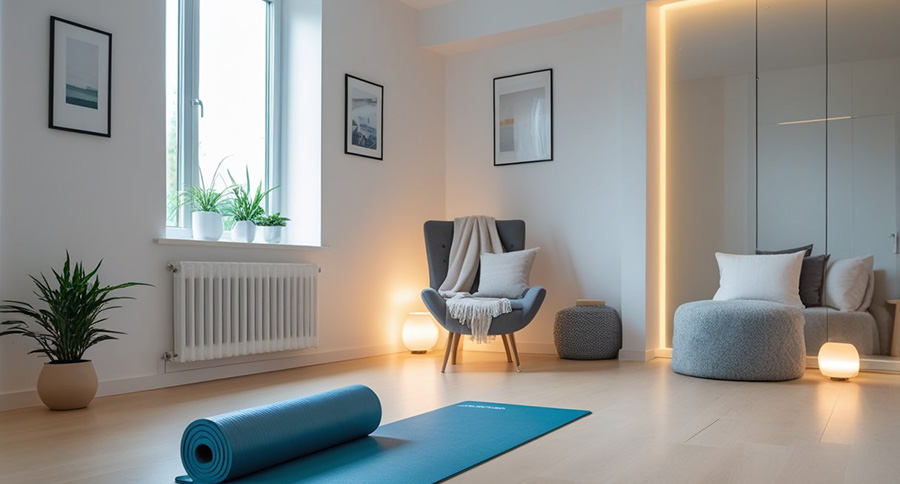
Picture a spare room with a mat, a supportive chair, and a basket for bands and a blanket. On a good day, you stretch and do light strength. On a hard day, you use the same space for breathing, heat, and a short rest.
With the concept clear, layout, hidden storage, lighting, and durable materials become simple decisions.
Plan the Room in 4 Moves: Layout, Storage, Light, Materials
A flexible wellness room works because it shifts with you, workout, recovery, quiet time, without making you drag equipment through the house. These moves turn “multi‑use” into a plan you can actually set up and maintain.
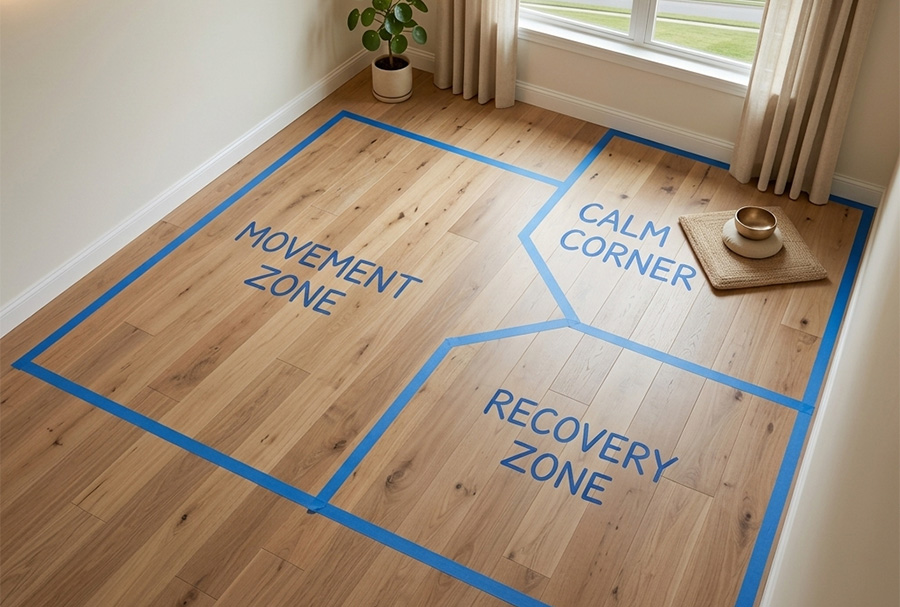
- Map three zones with tape (Move 1: Layout): Use painter’s tape to outline a movement zone, a recovery zone, and a calm corner right on the floor. Keep the movement zone closest to the door so you can step in and start without weaving around props, and aim for a clear “runway” path wide enough for a yoga mat plus your arms. If you deal with chronic pain, place your recovery zone near the most supportive seating or wall space so you can transition from standing to resting quickly.
- Design the room around one “anchor” piece (Move 1: Layout): Pick the item that’s hardest to move, treadmill, massage table, recliner, daybed, or even just a thick mat, and give it a permanent home. Everything else becomes “pop‑up,” stored and pulled out only when needed. This one decision reduces clutter fast and keeps the room from feeling like a half‑finished gym.
- Hide gear in plain sight with a one‑minute reset (Move 2: Storage): Set up one closed bin/basket for each category: bands + small weights, recovery tools, and “calming” items like a blanket or journal. Store the most-used bin between knee and chest height so you’re not bending and twisting. Create a tiny landing spot by the door, one hook and one tray, so you can do a 60‑second reset after each session: hang towels, toss bands in, wipe down, done.
- Use layered lighting: bright for energy, soft for downshift (Move 3: Light): Put your brightest light where you exercise (overhead or a strong lamp aimed away from your eyes), then add a warm, dimmable option for stretching or breathwork. If you can, keep lighting on two switches or two plug-in points so you’re not stuck with “operating room” brightness at bedtime. A simple rule: bright from above for movement, warm from the side for recovery.
- Choose materials that feel calm and clean easily (Move 4: Materials): Start with floors and surfaces you can wipe down quickly, especially if you’ll sweat, use lotions, or do hot/cold recovery. For a restorative look, design ideas like curved, organic forms can make the space feel softer and more welcoming than sharp corners. Even small swaps help: a rounded side table, a curved floor lamp, or an arched mirror.
- Make ergonomic choices that protect your joints (Move 4: Materials + Setup): Add comfort where your body meets the room: a supportive mat or rug pad, a stable chair with arms for sit-to-stand, and a wall spot for balance work. Keep frequently used items within easy reach (no deep squats for light dumbbells) and leave a “parking space” for mobility aids if you use them. This is the difference between a room you own and a room that quietly wears you out.
Put together, these four moves keep the room flexible on purpose, easy to set up for a workout, easy to soften for recovery, and easy to reset when life gets busy.
Wellness Room Questions, Answered
If you want it to stay simple in real life, these fixes help.
Q: How can I design a single room that effectively supports both fitness activities and relaxation without feeling cluttered?
A: Give each purpose a “home”: one open area for movement, one cozy spot for recovery, and one small calm nook for quiet habits. Limit what lives out to your one most-used item, and store everything else so the room does not look like a half-set gym. A wellness room definition can help you choose only what truly supports mental and physical well-being.
Q: What are the best storage solutions to maintain a tidy, multipurpose wellness space?
A: Use closed containers with simple labels by category, plus one “reset basket” for anything that needs to leave the room. Wall hooks and a slim shelf keep towels, bands, and headphones off the floor. If it takes more than a minute to put away, reduce the number of items.
Q: How does lighting influence the mood and function of a wellness room, and what should I consider when selecting it?
A: Bright, even light helps you move safely, while warmer, dimmable light signals your body to downshift. Try two lighting options you can switch without fuss, like a ceiling light for workouts and a lamp for stretch time. Also avoid glare by aiming bulbs away from your eyes and screens.
Q: Which materials and layout choices can help make a wellness space comfortable and easy to use for people with chronic pain?
A: Choose forgiving surfaces: supportive flooring, a cushioned mat, and seating with arms for easier standing. Keep pathways wide, store heavy items between knee and chest height, and place stability supports where you actually need them, like near a wall. When in doubt, prioritize fewer steps, less bending, and fewer awkward reaches.
Q: What steps can I take if I want professional help to plan and remodel a wellness room tailored to my specific health and lifestyle needs?
A: Start by writing down how you want to feel and what you will do in the room most days, then share those priorities with a pro. Use set clear remodeling goals to prevent scope creep, especially if you are adding a sink, steam, or other water features. Before work begins, sanity-check a parts checklist so plumbing and electrical needs are mapped early, including essential plumbing supply components.
Small, steady changes add up to a room that supports you daily.
Wellness Room Remodel: Quick Finish-Line Checklist
To keep it doable day to day:
This checklist turns good intentions into a room you will actually use, especially on low-energy or high-pain days. Use it to stay focused, prevent clutter creep, and keep decisions simple as the project moves.
- ✔ Define your top 2 daily uses and remove anything that does not support them.
- ✔ Measure your open floor zone so movement stays safe and unblocked.
- ✔ Select closed storage and label by category for one-step put-away.
- ✔ Set two lighting modes for bright activity and softer recovery.
- ✔ Place comfort supports where you need them most for standing and resting.
- ✔ Build a weekly reset routine that takes five minutes, not fifty.
- ✔ Write a short task list using planning is the foundation as your guide.
Check these off once, then let the room do the work.
Start a Wellness Haven That Reduces Clutter and Supports Care
It’s easy for self-care to get pushed aside when clutter keeps stealing time, space, and mental quiet. The fix isn’t a perfect remodel; it’s a flexible wellness space design mindset that makes support systems simple and repeatable, with long-term wellness planning baked into everyday life. When the room works with real routines, motivating home wellness improvements feel doable, and an empowering self-care environment starts to hold steady even on busy weeks.
A small, intentional wellness corner makes self-care easier to start and easier to repeat. Set a timer for 30 minutes and choose one finish-line checklist item to complete today. That small start builds a personal wellness haven that strengthens health, resilience, and calm over time. Try to stay Consistent with your Simple Wellness Goals.